Beyond the Fierce Image
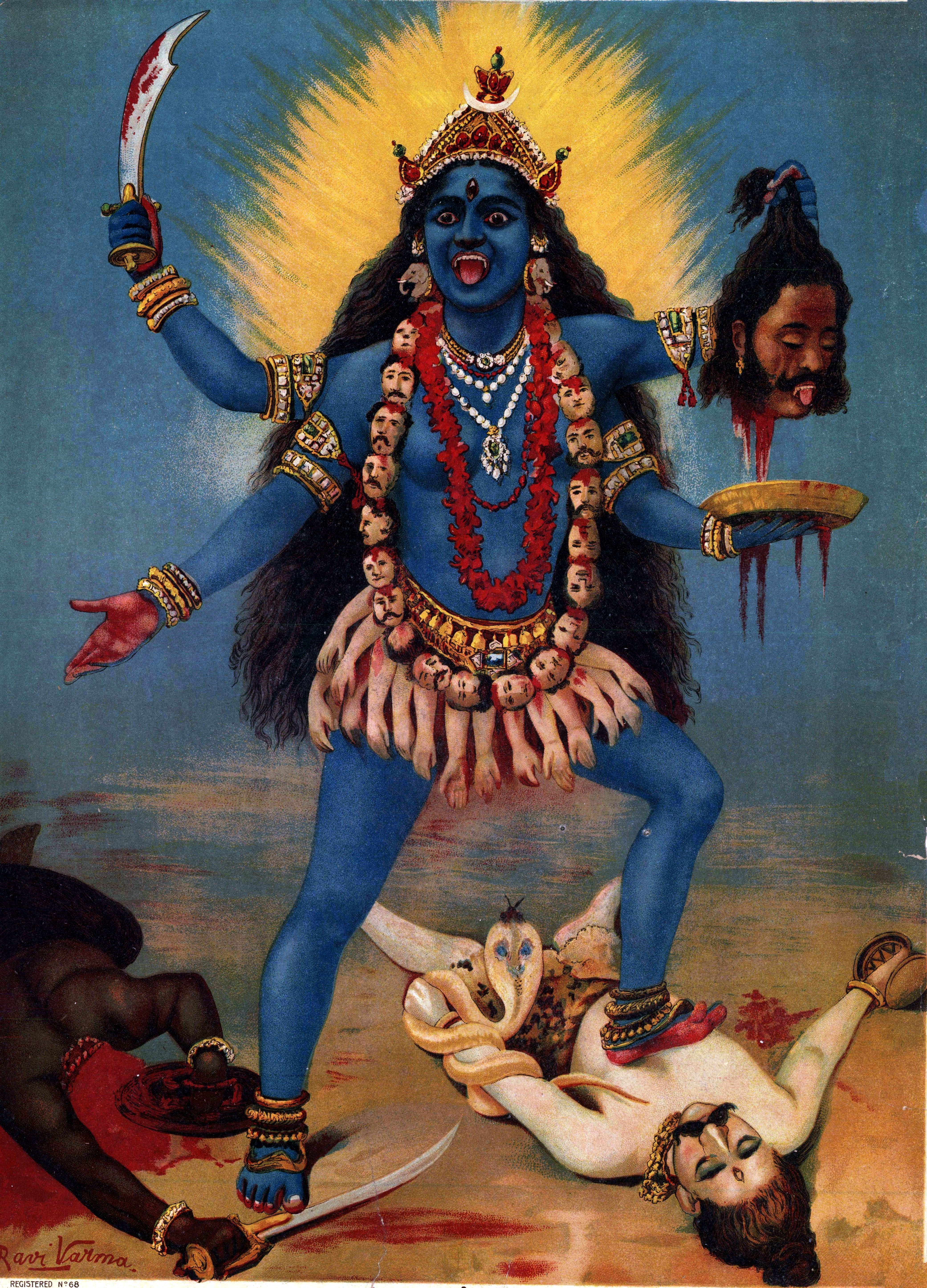
When you see images of the fierce Goddess Kali, what is the first thing that comes to mind. For many, it's the terrifying necklace of severed heads. But what if this fearsome adornment is not a symbol of brutality, but of a profound spiritual victory. Kali's iconography is steeped in symbolism, and her skull necklace is a potent example of this. The skulls, often mistaken for a gruesome display of violence, actually represent the ego's false identities being dismantled. This interpretation is rooted in Hindu philosophy, where the ego is seen as a major obstacle to spiritual growth. The fierce form of Kali is a purposeful representation of the destructive power needed to overcome this ego. Her necklace is a visual reminder that spiritual transformation can be a intense and profound process. It's a symbol that challenges our initial perceptions, inviting us to look deeper into the meaning behind the image.
The Cosmic Dance of Creation and Destruction
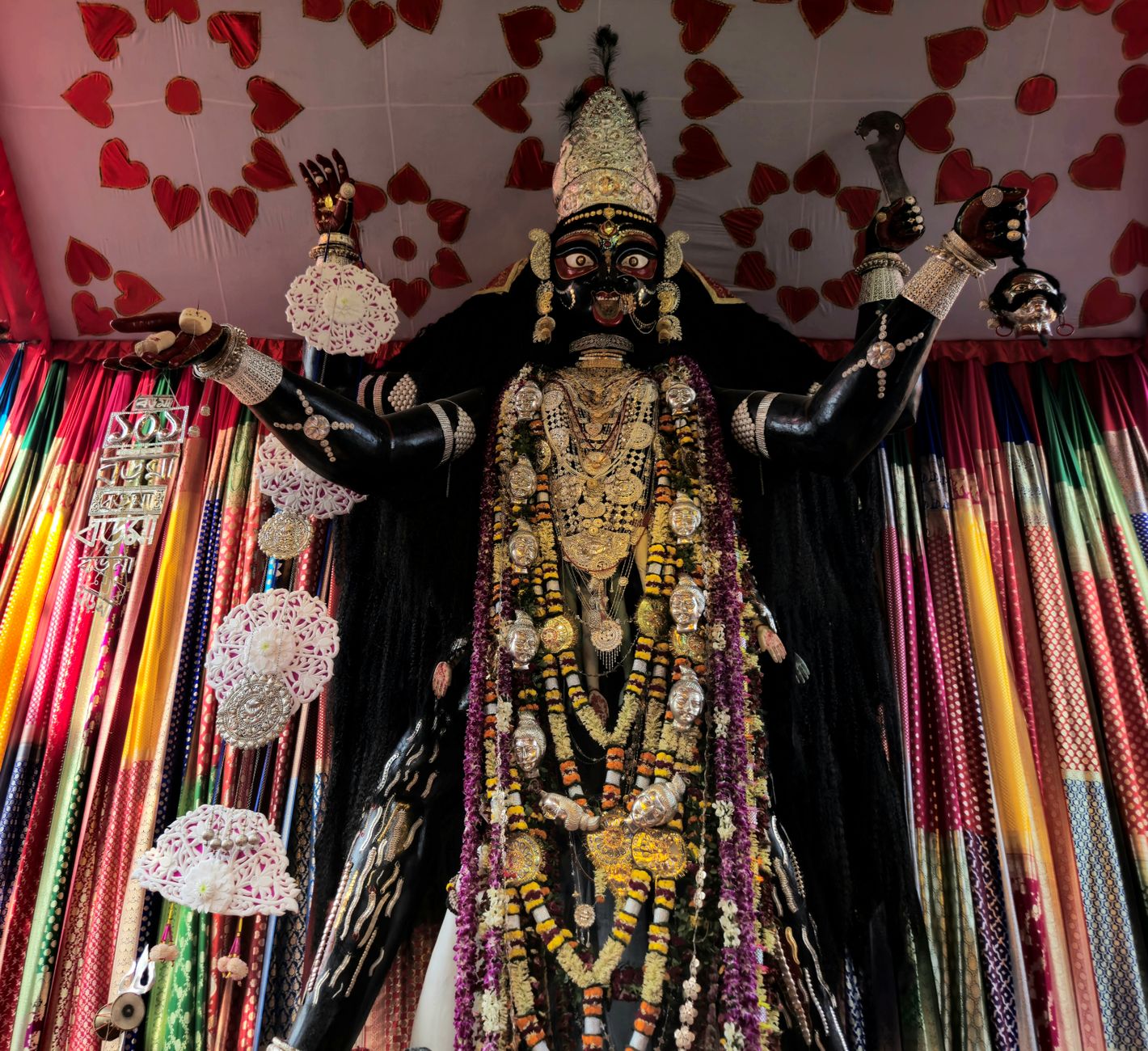
Kali's association with the cremation grounds, where the remnants of life are reduced to ashes, is a potent symbol of her role in transcending worldly attachments. This is where she's often depicted, surrounded by the impermanent remnants of the material body, reminding us that everything we know is fleeting. Her presence in these grounds signifies her power to cut through the illusions that bind us to the world. As a manifestation of Devi, Kali is primarily associated with time and transformation, representing both the destructive and regenerative aspects of the universe.
You've likely heard of the concept of the Mahapralaya, or the Great Dissolution, where Kali's force undoes creation, making way for its re-creation. This process is often depicted in Puranic narratives, where the universe is cyclically destroyed and reborn. Kali's role in this process is that of a necessary catalyst, dissolving the old to make way for the new. Her fierce aspect is not malicious, but rather a necessary cosmic function, akin to a surgeon's knife cutting away disease.
It's easy to get caught up in the dramatic imagery surrounding Kali, but that's exactly what she's meant to do - challenge our perceptions and push us to look beyond the surface. As a force of dissolution, Kali is not just a destroyer, but also a transformer, clearing the way for renewal and rebirth. That's what her necklace of severed heads really represents - the ego's destruction, not violence. Kali's power is a reminder that spiritual transformation can be intense and profound, and that's what makes her such a compelling figure in Hindu mythology.
Decoding the Skulls: The Ego's Many False Identities
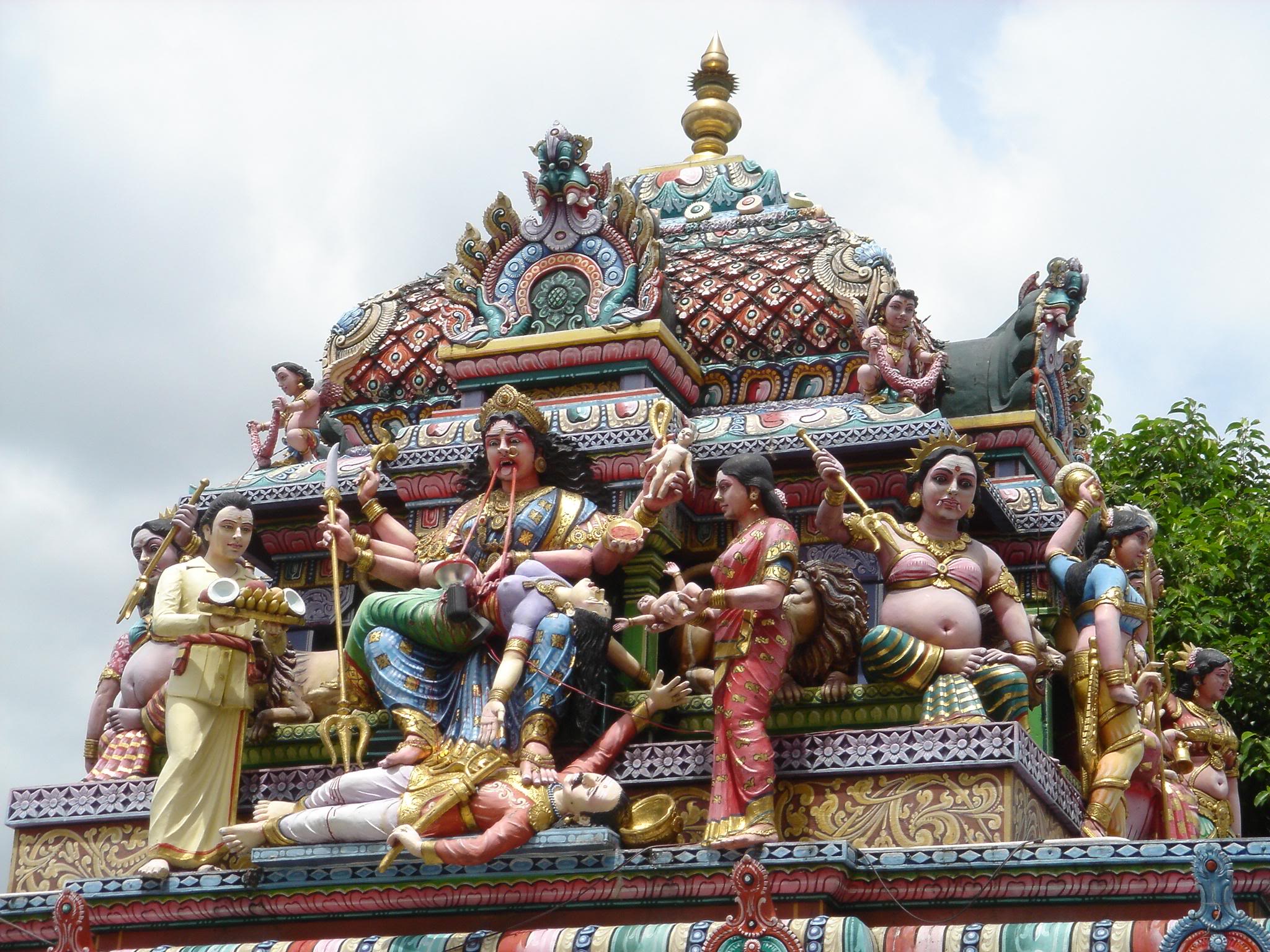
Kali's garland of severed heads is a potent symbol of the ego's destruction, with each head representing a false identification or ego-bound attachment that must be transcended. You've likely seen images of her wearing this garland, and it's striking to consider that the heads are often depicted as of varying sizes and ages, representing the lifelong accumulation of egoic constructs that Kali's power liberates. This accumulation is a key aspect of the Advaita Vedanta concept of Maya, where the ego constructs a false reality, and Kali's garland signifies the deconstruction of these illusory veils. Pride, anger, lust, greed, and delusion are all examples of the false identities that must be cut away, and Kali's garland is a visceral reminder of this process.
The varying sizes and ages of the heads also suggest that these egoic constructs are formed over time, and that they can be deeply ingrained. That's what makes Kali's power so intense and profound - she's not just destroying a single aspect of the ego, but rather the entire complex web of attachments and identifications that we've built up over a lifetime. By wearing these severed heads, Kali demonstrates her mastery over them, having integrated and ultimately dissolved them into her boundless consciousness. This is a powerful symbol of spiritual transformation, and it's a reminder that true liberation requires a deep understanding of the ego's many false identities.
The idea that Kali's garland represents the ego's many false identities is both fascinating and unsettling, as it challenges us to confront our own attachments and illusions. It's a reminder that spiritual growth is not always easy or comfortable, but rather a profound and intense process of transformation. Kali's power is a call to awakening, and her garland of severed heads is a potent symbol of the liberation that's possible when we transcend the ego's limitations. This symbol has the power to change our understanding of spiritual transformation, and it's an important part of Kali's enduring legacy in Hindu mythology.
Kali's Fierceness as a Mother's Tough Love

Kali's fierce appearance is a paradox, as she's often called "Kali Ma", or Mother Kali, by her devotees. This appellation highlights the nurturing and protective aspect of her character, which seems to contradict her terrifying form. Yet, for those who worship her, Kali's ferocity is directed at the inner demons and obstacles that hinder their spiritual growth, acting as a catalyst for awakening and liberation. It's a tough love, one that's meant to break down the barriers that prevent her devotees from achieving moksha.
You've likely seen a mother who appears stern or punishing to her child, only to realize that her actions are motivated by a desire to ensure their safety and well-being. Kali's "violence" can be seen in a similar light, as it's ultimately aimed at the devotee's ultimate good. By confronting and overcoming their deepest fears and limitations, devotees of Kali can develop the courage and freedom they need to achieve spiritual liberation. Devotion to Kali, particularly through practices that embrace her fierce aspect, can lead to a dissolution of personal limitations, allowing individuals to transcend their ego's boundaries and achieve a deeper sense of self-awareness.
That's what makes Kali's fierce form so compelling, as it represents a profound maternal care that's willing to challenge and transform her devotees in order to set them free. It's not about violence or aggression, but about the tough love of a mother who wants to see her children grow and thrive. Kali's power is a call to awakening, and her fierce appearance is a reminder that spiritual growth often requires a willingness to confront and overcome our deepest fears and limitations. Her devotees don't see her as a symbol of violence, but as a symbol of liberation, and that's what makes her such a powerful and enduring figure in Hindu mythology.
Practical Application: Dismantling Your Own "Heads"

Embracing Kali's symbolism means confronting the darkest aspects of our own psyche, and that's a daunting task. It requires a willingness to identify the egoic attachments and false beliefs that hinder our spiritual growth, what we can think of as our own "severed heads". You've got to be willing to look at your own thought patterns, emotions, and behaviors, and acknowledge the ways in which they hold you back. Self-inquiry, or Vichara, is a powerful practice for this, as it involves questioning your own thoughts and assumptions, and observing your emotions without judgment.
Mindful observation of your thoughts and emotions can be a transformative experience, as it allows you to see the ways in which your ego tries to control and manipulate you. It's not always easy, and it's not always comfortable, but it's a necessary step in the process of ego dissolution. When you're faced with challenges and discomfort, you've got to learn to see them as opportunities for growth, rather than threats to your ego. That's what Kali's imagery is all about - it's not about fear, but about reverence for her power to liberate.
Contemplating Kali's imagery can be a powerful way to foster a sense of surrender and trust in the transformative process. You don't have to be afraid of her, or of the process of ego dissolution - instead, you can approach it with reverence and respect. That's what her devotees do, and that's what you can do too. It's a process that takes time, patience, and courage, but it's one that can lead to profound inner transformation, and a deeper understanding of yourself and the world around you. You've got to be willing to take the first step, and that's what Kali's power is all about.
Embracing Transformation Through Kali's Gaze
Kali's fearsome form and her garland of heads are powerful metaphors for the ego's dissolution, not literal acts of violence. Her destructive aspect is essential for cosmic balance, representing the necessary dismantling of false identities and attachments. This symbolism guides us towards spiritual liberation, led by the fierce love of the Divine Mother. Reflect on one egoic attachment you can begin to "sever" from your consciousness today, inviting Kali's transformative energy into your practice. You've got to be willing to let go, and that's where Kali's power comes in, transforming your understanding of yourself and the world.
Sources & References
- Kali Wears Skulls Not because she's violent. Because ... - Instagram
- The REAL reason Kali wears a necklace of skulls #mythology ...
- Everyone has seen Kali holding a severed head. Almost no one ...
- The Decapitated head Kali Maa is holding Represents the Ego She ...
- But Kali's destruction is never random. In Hindu tradition she ...
- Symbolism of Goddess Kali The Rage and The Calm ! Forms of ...
- Kali Ma A Goddess Misunderstood | The Jai Jais
- The Real Meaning of Kali — The Most Misunderstood Goddess ...

