
The Roar That Wasn't Heard
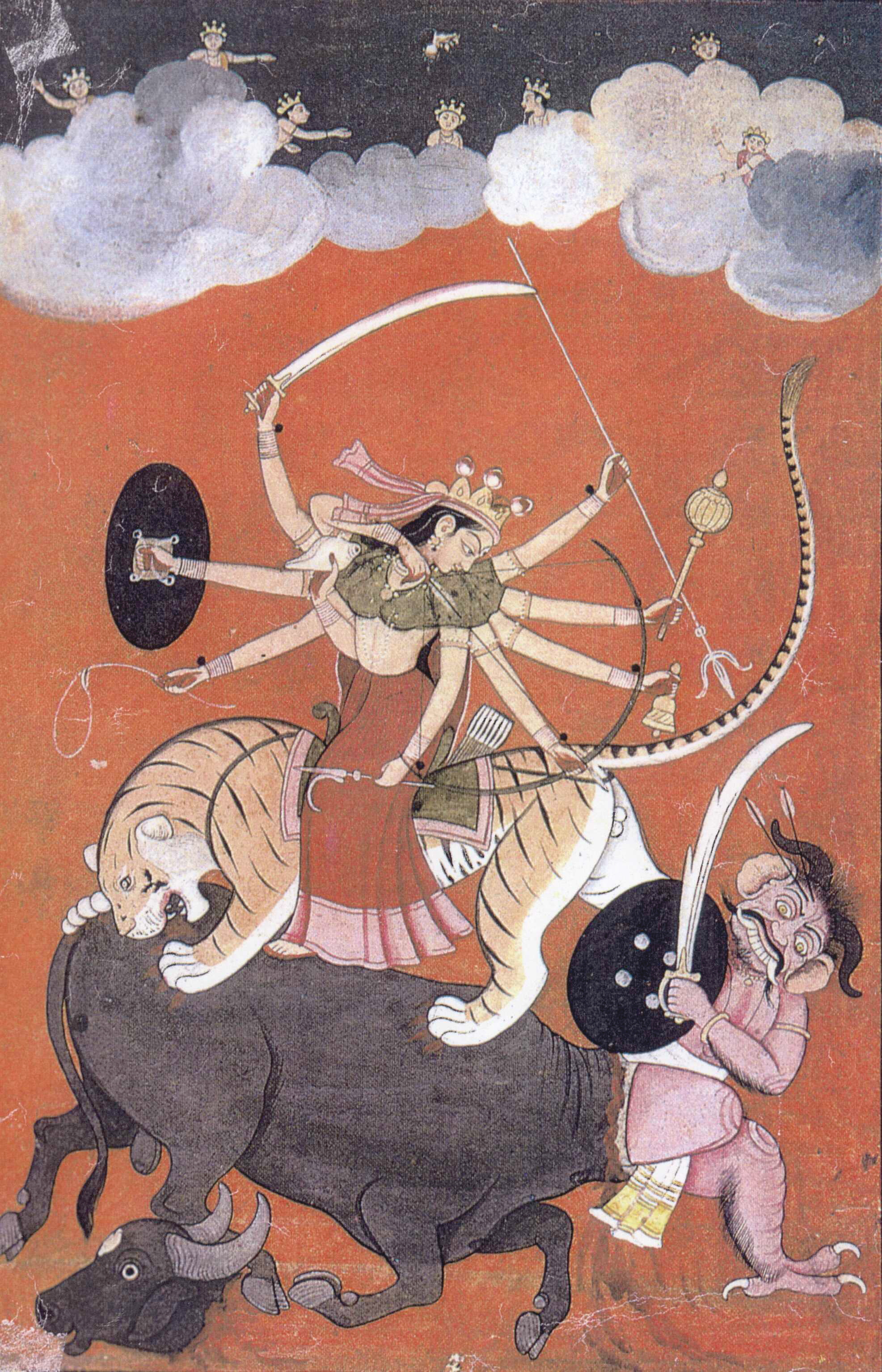
The fiercest battle ever fought was about to commence, Goddess Durga poised to strike, her mighty lion ready to pounce on the buffalo-demon Mahishasura, but then, in a moment that would change the course of the war, the lion refused to attack. This iconic battle is often reduced to a simplistic tale of good vs evil, with Durga emerging victorious over the forces of darkness. However, the story is more complex, with the lion's hesitation rooted in its recognition of Mahishasura's past life as a devout follower of the gods. The lion, Simha, was bound by a moral code that prevented it from attacking one who had once been righteous. Durga's subsequent actions reveal a profound moral lesson, one that transcends the brute force often associated with divine justice, and instead emphasizes the importance of righteous intent and the moral framework within which power is wielded. The story of Durga and Mahishasura is a nuanced exploration of divine justice, one that challenges simplistic notions of power and morality.
The Cosmic Drama of Mahishasura's Rise

Mahishasura's rise to power was a cataclysmic event that sent shockwaves through the cosmos, as this powerful Asura gained boons from the gods that made him nearly invincible to the male deities. His origins were rooted in darkness and chaos, and as he grew in strength, the celestial realms began to crumble under his oppressive rule. The Devas, once the epitome of power and wisdom, now cowered in fear, their realms ravaged by Mahishasura's unrelenting onslaught. Earthly realms suffered equally, as the natural order was disrupted, and the people cried out for divine intervention. It became clear that the male pantheon, with all their combined strength, couldn't defeat Mahishasura, and a new strategy was needed. This is where the concept of Shakti, or divine feminine power, comes into play, as it's often said that when the male gods fail, the goddess must intervene. Mahishasura's reign was the embodiment of adharma, or unrighteousness, a force that threatened to upend the cosmic order, or dharma, that governed the universe. Durga, as the embodiment of this cosmic order, was the only one who could restore balance to the universe. The stage was set for a cosmic drama, one that would pit the forces of chaos against those of order, with the fate of the universe hanging in the balance. The question is, how would Durga's intervention play out, and what would it reveal about the nature of divine justice.
The Lion's Refusal — A Moral Compass in the Battle

Durga's lion, Simha, stood at the threshold of battle, poised to strike down Mahishasura, the buffalo demon, at the Goddess's command. But in a surprising turn of events, Simha refused to attack, despite the urgency of the situation. This refusal wasn't born out of fear or weakness, but from a deep understanding of the cosmic law that governed even divine power. You've probably heard stories of divine interventions, but this one's different, it's a story about moral compass.
Mahishasura, for all his tyrannical nature, hadn't committed an overt act of adharma in that moment, and Simha recognized this. The lion's hesitation stemmed from the fact that Mahishasura's immediate actions didn't warrant a violent response, and Simha wouldn't engage in a fight without a clear provocation. It's a principle that's easy to overlook, but it's crucial to understanding divine justice. Direct aggression, even from a divine source, requires a clear justification, a moral imperative that sets it apart from mere vengeance or a display of power.
The contrast between a power-based fight and one driven by moral justification is stark. A purely power-based approach would have Simha attacking Mahishasura without hesitation, driven by the Goddess's command alone. But that's not what happened. Instead, Simha's refusal highlights the importance of moral justification, even in the face of seemingly obvious evil. It's a nuanced view of divine justice, one that recognizes the complexity of the situation and the need for a moral compass to guide action. That's what makes this story so compelling, it's not just a battle between good and evil, but a exploration of what it means to do what's right.
Divine Justice Beyond Brute Force
The story of Durga's lion refusing to fight Mahishasura is a stark reminder that divine justice is not merely about brute force, but about restoring dharma through righteous means. It's a nuanced view that recognizes the complexity of the situation, where the ends don't always justify the means. Mahishasura's eventual defeat by Durga, after his transformation and aggressive actions, signifies the ultimate triumph of dharma over adharma when the latter fully manifests its destructive potential. This narrative underscores that divine justice is measured, strategic, and rooted in moral principles, not just raw power or expediency.
The significance of this story lies in its ability to convey that true strength lies not only in might but in the wisdom and righteousness with which that might is applied. This is a key teaching in the Bhagavad Gita concerning dharma-yuddha, or righteous war, where the emphasis is on fighting for what's right, not just fighting to win. It's a subtle distinction that makes all the difference, as it acknowledges that the means by which we achieve victory are just as important as the victory itself. You've probably heard stories of great warriors who won battles but lost the war, and that's because they didn't consider the moral implications of their actions.
The story of Durga and Mahishasura serves as a reminder that divine justice is not just about punishing the wicked, but about upholding the principles of dharma. It's a reminder that our actions have consequences, and that we must consider the moral implications of what we do. That's what makes this story so compelling, it's not just a battle between good and evil, but an exploration of what it means to do what's right. The Bhagavad Gita teaches us that dharma-yuddha is not just a physical battle, but a moral one, and that's what Durga's victory represents. It's a victory of righteousness over evil, and it's a reminder that true strength comes from wisdom and moral principles, not just physical power. The story of Durga's lion refusing to fight is a powerful reminder of this truth, and it's a lesson that we can all learn from.
Lessons for the Modern Seeker
The tendency to expect immediate, forceful responses to perceived injustice is a common trap, one that the story of Durga's lion helps us recognize. We often mirror the lion's initial instinct to attack, reacting out of emotion or a sense of threat, rather than taking a step back to discern the situation. It's crucial to consider the adharma in any given situation, to understand the nature of the imbalance or wrongdoing, before acting. This discernment is what allows us to respond in a way that upholds dharma, rather than simply reacting out of anger or a desire for revenge.
You've probably found yourself in situations where you felt the need to act quickly, to defend yourself or others from harm, but the story of Durga's lion suggests that patience and moral clarity are essential. The principle of righteous intent is key here, guiding our actions towards the pursuit of dharma, even in the most challenging situations. It's not always easy to do, but it's what sets us on the path towards true strength and wisdom.
Divine justice is often misunderstood as arbitrary punishment, but the story of Durga's lion helps us see it as a cosmic balancing act, one that upholds righteousness and inspires patience and inner strength. That's what Durga's victory represents, a reminder that true strength comes from wisdom and moral principles, not just physical power. It's a lesson that can help us navigate the complexities of our own lives, and find a sense of peace and clarity in the midst of chaos. We don't have to react to every situation with force or aggression, and that's a powerful realization.
The Lion's Silence, The Goddess's Wisdom
The hesitation of Durga's lion reveals that divine justice is deeply rooted in moral principles, not just power. This story shows that true righteousness requires not only strength but also the discernment to act only when adharma is clearly manifested. It's a lesson that can help us navigate life's challenges with balance and moral clarity. We've seen how Durga's victory represents a reminder that true strength comes from wisdom and moral principles. Contemplate the situations in your life where a forceful reaction might seem justified, and consider if a deeper discernment of dharma could guide a more righteous path. That's where the real power lies, and it's a path that can lead us to a more peaceful and just life.
Sources & References
- Did you know there's a goddess who rides a lion and never asks ...
- The Legend of Goddess Durga and the Defeat of Mahishasura In ...
- The Hidden Symbolism Behind the Lion and Weapons in Goddess ...
- Why Maa Durga Rides a Lion- Find out Here! - Luxeartisanship
- The Goddess, her lion and her weapons. Durga is a very protective ...
- Even the Lion Beside Goddess Durga Knows Her Power She arrives ...
- Goddess Durga defeated Mahishasura in a nine-day battle. But who ...
- Shemaroo Kids - Facebook